

How to Choose the Right Plastic Polymer for Your Manufacturing Application
2026-09-26
Selecting the right plastic polymer is an important part of developing a reliable manufacturing process. Different polymers offer different combinations of strength, flexibility, chemical resistance, temperature performance, appearance, processing behavior, and cost. Choosing a material based only on price or general availability can result in processing difficulties or a finished product that does not perform as expected.
For manufacturers, distributors, and industrial buyers, the better approach is to evaluate the material according to the actual requirements of the application.
Start With the Application Requirements
The first step is to understand how the finished product will be used. A packaging container, automotive component, electrical housing, pipe, film, fiber, or industrial component may require completely different material characteristics.
Consider questions such as:
-
What mechanical performance is required?
-
Will the product experience impact, pressure, friction, or repeated movement?
-
Will it be exposed to chemicals, moisture, sunlight, or heat?
-
Does the application require flexibility or rigidity?
-
Is appearance or transparency important?
-
What manufacturing process will be used?
These factors help narrow the material selection before comparing individual grades.
Consider the Manufacturing Process
A polymer suitable for one manufacturing process may not be the best choice for another. Injection molding, blow molding, extrusion, film production, rotational molding, fiber production, and other processes have different material requirements.
For example, manufacturers producing bottles may consider specific PET or HDPE grades, while film producers may require suitable LDPE, LLDPE, PP, or other film-oriented materials. Pipe manufacturers may require polymer grades designed around the performance and processing requirements of pipe production.
Understanding the production method therefore plays an important role in selecting an appropriate material.
Evaluate Mechanical Properties
Mechanical performance is another important consideration. Depending on the application, manufacturers may need tensile strength, impact resistance, stiffness, flexibility, abrasion resistance, dimensional stability, or other characteristics.
Commodity polymers such as polyethylene and polypropylene are widely used across many applications, while engineering plastics such as polyamide, polycarbonate, POM, PBT, and other technical materials may be considered when more demanding performance requirements exist.
The correct choice depends on the conditions the finished component must withstand.
Consider Temperature and Chemical Exposure
Operating temperature can significantly influence polymer selection. Some applications require materials that maintain useful properties under elevated temperatures, while others operate primarily under normal ambient conditions.
Chemical exposure should also be considered. Oils, solvents, acids, cleaning agents, fuels, water, and other substances can interact differently with different polymers.
Manufacturers should therefore evaluate both the expected temperature range and chemical environment before finalizing a material.
Think About Product Weight and Design
One of the advantages of plastics is their ability to provide useful performance at relatively low weight. This can be important in automotive components, packaging, consumer products, electrical applications, and many other industries.
Material selection can influence wall thickness, component weight, rigidity, design flexibility, and manufacturing efficiency. A suitable polymer may allow designers to achieve the required product characteristics without unnecessarily increasing material usage.
Compare Virgin and Recycled Materials
Depending on the application, buyers may also consider recycled polymers alongside virgin materials.
Recycled HDPE, LDPE, LLDPE, PP, ABS, PVC, PET, and other recovered materials can be relevant for products where recycled content and appropriate performance requirements align. However, the suitability of recycled material depends on feedstock characteristics, processing requirements, application expectations, and the intended end use.
Material selection should therefore consider both performance requirements and the specific characteristics of the available recycled grade.
Consider Additives and Masterbatch
Base polymer selection is only part of the material decision. Additives and masterbatch can be used to modify color, processing behavior, appearance, or selected material characteristics.
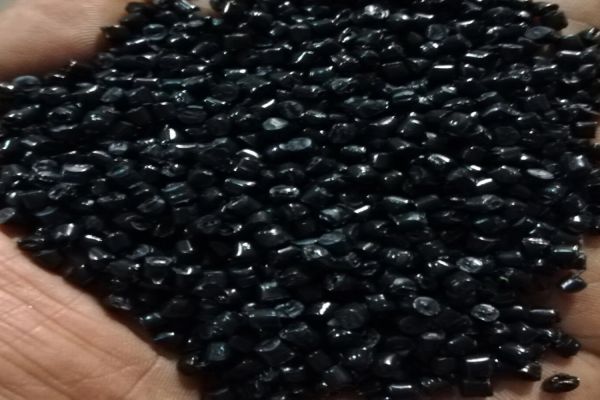
Color masterbatch, black masterbatch, white masterbatch, filler masterbatch, calcium carbonate, and other additives may be incorporated into polymer processing depending on the product and manufacturing requirements.
These materials should be evaluated together with the base resin and production process rather than treated as completely separate purchasing decisions.
Work With Product-Specific Information
A polymer name alone is often not enough to determine whether a material is suitable for a particular application. Different grades within the same polymer family can have significantly different processing and performance characteristics.
When evaluating a material, buyers should review available technical information, grade specifications, intended applications, processing requirements, and other relevant documentation. Where technical requirements are critical, manufacturers should confirm suitability through appropriate testing and validation.
Choosing a Polymer Supplier
A useful polymer supplier should make it easier to identify materials according to the application rather than simply presenting a long product list.
FCI Germany GMBH provides a broad portfolio covering polyethylene, polypropylene, PVC, PET, polystyrene, ABS, ASA, SAN, engineering plastics, specialty polymers, biodegradable materials, recycled polymers, masterbatch, fillers, and additives.
The company works with international buyers seeking polymer materials for applications across packaging, construction, automotive, electrical and electronics, agriculture, consumer products, industrial manufacturing, textiles, recycling, and other sectors.
Final Considerations
Choosing the right polymer requires more than comparing product names or prices. Application conditions, manufacturing processes, mechanical requirements, temperature, chemical exposure, product design, material consistency, and end-use expectations should all be considered.
A structured material-selection process can help manufacturers reduce uncertainty and identify polymer options that are better aligned with their actual production requirements.
For businesses sourcing plastics and polymers internationally, FCI Germany GMBH provides a broad product portfolio that can be explored according to material type, grade, application, and purchasing requirements.